Education technology is no longer built as a single, all-in-one platform. The most useful learning tools today are connected ecosystems: learning management systems, digital libraries, assessment apps, video platforms, analytics dashboards, and AI tutors that exchange data securely. At the center of this ecosystem are open APIs, which allow developers, schools, publishers, and startups to build tools that work together instead of trapping data in isolated systems.
TLDR: The best open APIs for education technology help platforms share courses, grades, rosters, content, learning activity, and authentication data. Standards such as LTI, OneRoster, xAPI, and Caliper Analytics are especially important because they improve interoperability across schools and vendors. Public APIs from platforms such as Canvas, Moodle, Google Classroom, Microsoft Graph, OpenAlex, and Open Library can also power practical EdTech products. The right API depends on whether your tool needs content delivery, classroom management, analytics, identity, research data, or student progress tracking.
Why Open APIs Matter in EdTech
In education, technology is only valuable if it fits into the daily workflow of teachers and learners. A brilliant quiz app is less useful if teachers must manually create every class, upload every student list, and export grades by hand. A digital textbook platform becomes far more powerful when it can launch directly from a course, remember where a student left off, and send performance data back to the teacher’s gradebook.
This is where open APIs and open interoperability standards come in. They reduce duplicate work, prevent vendor lock-in, and make it easier for institutions to adopt new tools without rebuilding their entire tech stack. For developers, they provide a structured way to create applications that integrate with schools, universities, libraries, and learning platforms.

1. Learning Tools Interoperability, LTI
Learning Tools Interoperability, usually called LTI, is one of the most important standards in modern EdTech. Developed by the 1EdTech Consortium, LTI allows external learning tools to connect with learning management systems such as Canvas, Blackboard, Moodle, D2L Brightspace, and Schoology.
With LTI, a student can click a link inside an LMS and launch an external app without creating a separate account. The tool can receive context about the course, user role, and assignment. Depending on the implementation, it can also pass grades back to the LMS.
Best for:
- Launching third-party learning apps from an LMS
- Connecting courseware, simulations, and assessment tools
- Reducing login friction for students and teachers
- Returning scores to the LMS gradebook
Why it stands out: LTI is not just an API; it is a widely adopted interoperability standard. If you are building a learning app that must work across many institutions, LTI support is close to essential.
2. OneRoster API
OneRoster, also from 1EdTech, is designed to solve a common administrative headache: keeping class rosters accurate across multiple systems. Schools need student information systems, learning platforms, assessment tools, and content apps to know which students belong to which classes. Manually syncing that information is slow and error-prone.
OneRoster provides a standardized way to exchange data about users, classes, enrollments, schools, demographics, and grades. It can be implemented through CSV files or through a REST API, making it flexible for different levels of technical maturity.
Best for:
- Syncing student and teacher accounts
- Automating classroom setup
- Connecting student information systems with EdTech tools
- Supporting district-level deployments
Why it stands out: For K-12 tools, roster integration can determine whether a product is easy or painful to adopt. OneRoster makes large-scale onboarding much more manageable.
3. Experience API, xAPI
xAPI, also known as the Experience API or Tin Can API, is built for tracking learning experiences beyond the traditional LMS. Instead of only recording quiz scores or course completions, xAPI captures learning activity in the form of simple statements such as: “A learner completed a simulation” or “A learner watched a video.”
These statements are stored in a Learning Record Store, or LRS. This makes xAPI especially useful for organizations that want to track learning across mobile apps, games, VR environments, workplace training platforms, offline activities, and informal learning experiences.
Best for:
- Learning analytics across multiple environments
- Corporate training and professional development
- Simulation-based learning
- Tracking informal and experiential learning
Why it stands out: xAPI is highly flexible. It recognizes that learning does not only happen inside an LMS, which makes it ideal for innovative and immersive education products.
4. Caliper Analytics API
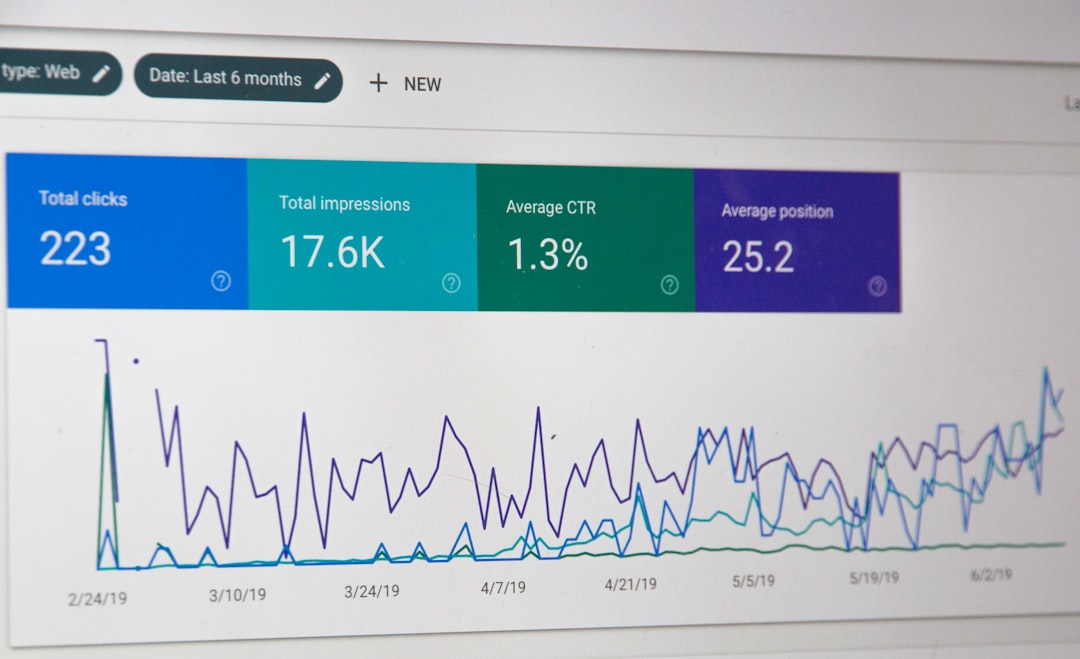
Caliper Analytics is another 1EdTech standard focused on learning data. While xAPI is broad and flexible, Caliper is more structured around common educational events. It defines a consistent vocabulary for actions such as reading, submitting assignments, taking assessments, viewing media, and participating in discussions.
For institutions and developers that care about comparable learning analytics, this structure is valuable. It helps different tools describe activity in a common way, making dashboards and reports more reliable.
Best for:
- Learning analytics dashboards
- Monitoring student engagement
- Comparing data across different learning tools
- Institutional research and reporting
Why it stands out: Caliper gives education data a shared language. That is incredibly useful when schools want insight across many different platforms.
5. Canvas LMS API
Canvas is one of the most widely used learning management systems in higher education and K-12. Its REST API is extensive and well documented, making it a favorite among EdTech developers. The Canvas API can be used to manage courses, assignments, users, enrollments, submissions, files, grades, announcements, and discussions.
Because many institutions already use Canvas as their central learning hub, integrating with the Canvas API can make an EdTech product feel native to the school’s workflow. Developers can automate administrative tasks, build custom dashboards, or create specialized tools that interact with Canvas course data.
Best for:
- Course and assignment management
- Gradebook integrations
- Custom institutional tools
- Student and teacher dashboards
Why it stands out: Canvas offers one of the strongest API ecosystems among commercial LMS platforms, and its developer documentation is approachable compared with many enterprise systems.
6. Moodle Web Services API
Moodle is an open-source LMS used around the world by schools, universities, nonprofits, and training organizations. Its Web Services API allows developers to interact with courses, users, groups, grades, forums, assignments, quizzes, and other LMS functions.
Because Moodle itself is open source, it is especially attractive for organizations that want control over customization and hosting. Developers can build plugins, mobile integrations, reporting tools, and external applications that connect with Moodle installations.
Best for:
- Open-source LMS customization
- Self-hosted education platforms
- Institution-specific workflows
- Global learning projects with limited budgets
Why it stands out: Moodle combines API access with open-source flexibility. For teams that need deep customization, it is one of the most adaptable options available.
7. Google Classroom API
The Google Classroom API allows developers to work with courses, coursework, announcements, submissions, topics, teachers, and students in Google Classroom. It is especially useful for schools already using Google Workspace for Education.
Developers can use the API to create assignments, retrieve student submissions, integrate content resources, and simplify classroom administration. Combined with Google Drive and Google Docs APIs, it can support powerful document-based learning workflows.
Best for:
- K-12 classroom workflow automation
- Assignment creation and distribution
- Google Workspace integrations
- Teacher productivity tools
Why it stands out: Google Classroom is familiar to many teachers and students, so tools that integrate smoothly with it can achieve fast adoption.
8. Microsoft Graph API for Education
Microsoft Graph provides a unified API for Microsoft 365 services, including education-specific resources. Through Microsoft Graph for Education, developers can access data related to schools, classes, users, assignments, submissions, and Teams for Education.
This API is particularly relevant for institutions using Microsoft Teams, OneNote, Outlook, SharePoint, and other Microsoft education tools. It enables developers to build apps that connect communication, collaboration, assignments, and identity management.
Best for:
- Microsoft Teams education integrations
- School communication tools
- Assignment and submission workflows
- Identity and profile management
Why it stands out: Microsoft Graph is broad. It can connect learning activities with productivity, communication, files, calendars, and enterprise identity in one ecosystem.
9. OpenAlex API
OpenAlex is an open catalog of scholarly works, authors, institutions, sources, topics, and citations. Its API is extremely useful for education tools focused on research discovery, academic publishing, citation analysis, and knowledge mapping.
For universities, libraries, and research-focused applications, OpenAlex provides structured access to a rich body of scholarly metadata. Developers can build recommendation engines, research dashboards, topic maps, and academic search tools.
Image not found in postmetaBest for:
- Academic search and discovery
- Research analytics
- Citation and publication tools
- University library applications
Why it stands out: OpenAlex is open, expansive, and valuable for tools that help learners and researchers navigate scholarly knowledge.
10. Open Library API
The Open Library API, from the Internet Archive, gives developers access to book metadata, covers, subjects, authors, editions, and availability information. It is useful for building reading apps, library discovery tools, classroom book lists, and literacy platforms.
Education tools can use Open Library data to enrich reading recommendations, display book covers, organize classroom libraries, or help students discover related titles. For projects that support reading and literature, it is a practical and accessible API.
Best for:
- Reading recommendation tools
- Digital library interfaces
- Classroom book lists
- Literacy and language learning apps
Why it stands out: It offers easy access to a large collection of book-related data, making it an excellent resource for educational reading experiences.
11. H5P Integration APIs
H5P is an open-source platform for creating interactive learning content such as quizzes, presentations, branching scenarios, flashcards, interactive videos, and drag-and-drop exercises. While it is often used as a plugin inside platforms like Moodle, WordPress, and Drupal, H5P also offers integration possibilities for developers who want to embed or manage interactive content.
Best for:
- Interactive course content
- Formative assessment
- Open educational resources
- Engaging multimedia lessons
Why it stands out: H5P makes interactive learning content easier to create and reuse, which is valuable for both teachers and platform builders.
How to Choose the Right Education API
The best API depends on the problem your tool is trying to solve. A tutoring app may need LTI for launching from an LMS and OneRoster for class setup. A learning analytics product might use Caliper or xAPI. A research assistant may rely on OpenAlex, while a reading platform may benefit from Open Library.
When evaluating APIs, consider:
- Interoperability: Does the API work across many platforms or only one ecosystem?
- Documentation quality: Are examples, authentication guides, and SDKs available?
- Data privacy: Does the API support secure handling of student information?
- Adoption: Are schools, LMS providers, and vendors already using it?
- Scalability: Can it handle district-wide or university-wide usage?
- Standards compliance: Does it support recognized education standards?
Final Thoughts
The strongest EdTech tools are not just feature-rich; they are integration-ready. Open APIs and standards allow education platforms to communicate, automate workflows, personalize learning, and generate meaningful insights. They help teachers spend less time managing technology and more time teaching.
For developers, the most strategic approach is to combine platform-specific APIs with open standards. Use LTI to launch tools, OneRoster to manage class data, xAPI or Caliper to capture learning activity, and APIs like Canvas, Moodle, Google Classroom, or Microsoft Graph to meet institutions where they already work. Add open knowledge APIs such as OpenAlex and Open Library, and you can build tools that are not only useful but also connected to the wider world of learning.
In a field where every school has different systems, budgets, and needs, open APIs are the bridge. They make education technology more flexible, more accessible, and ultimately more human.