A logo built around the letter P can be simple, memorable, and highly adaptable when it is designed with discipline. Whether the mark represents a personal brand, a professional service, a product line, or a modern startup, a P lettermark can communicate confidence without relying on complicated imagery. The strongest results come from balancing creativity with clarity, so the logo remains recognizable across websites, packaging, social media profiles, signage, and printed materials.
TLDR: A creative logo with P works best when the letter is easy to recognize, visually distinctive, and aligned with the brand’s personality. Effective ideas include monograms, negative space, geometric forms, premium serif lettering, minimalist marks, and symbol-based integrations. The most trustworthy designs avoid excessive detail and focus on proportion, readability, and long-term usability.
Why the Letter P Works Well in Logo Design
The letter P has a naturally strong structure. Its vertical stem gives it stability, while its rounded bowl creates movement and visual balance. This makes it suitable for a wide range of industries, from finance and consulting to fashion, technology, photography, property, publishing, and personal branding.
Unlike some letters that can feel either too rigid or too complex, P can be shaped in many directions. It can look elegant, futuristic, playful, strict, luxurious, or artistic depending on the chosen type style. This flexibility is one reason lettermark logos remain popular among businesses that need a compact and professional identity.
A well-designed P logo can also function as a standalone icon. This is especially useful in digital environments where brands need recognizable marks for apps, favicons, profile images, watermarks, and small-scale placements.
Core Principles of a Strong P Lettermark
Before exploring creative ideas, it is important to understand what makes a lettermark reliable. A logo is not just decoration. It is a business asset that must perform consistently over time.
- Legibility: The letter must be recognizable as a P, even at small sizes.
- Distinctiveness: The design should avoid looking like a generic typeface with no customization.
- Scalability: The mark should work on both a business card and a large sign.
- Relevance: The style should match the brand’s industry, audience, and values.
- Simplicity: Unnecessary effects, shadows, and excessive details usually reduce professional impact.
These principles are especially important for a single-letter logo because there is limited visual material to work with. Every curve, angle, gap, and proportion matters.
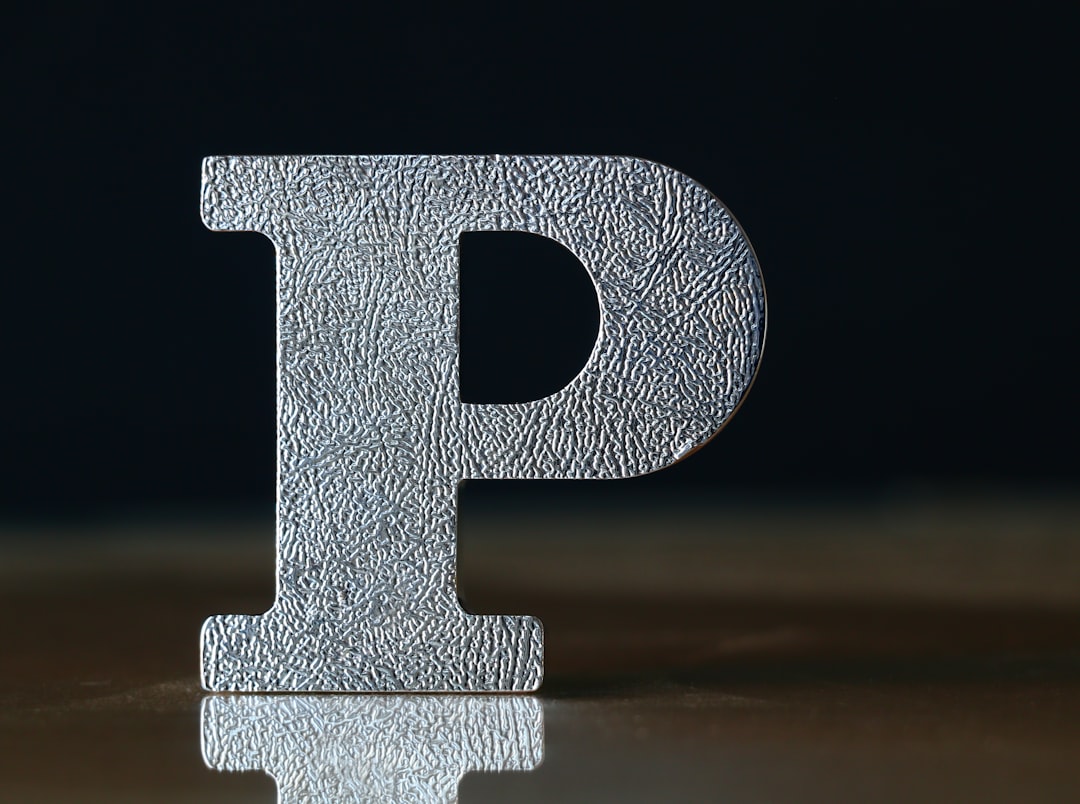
Minimalist P Logo Ideas
A minimalist P logo is often the safest and most versatile choice. Minimalism does not mean plain or boring. It means reducing the design to its most essential elements while preserving visual character.
For example, the vertical stem of the P can be slightly thickened to create authority, while the bowl can be simplified into a clean semicircle. A small cut, angle, or interruption in the form can give the mark a distinctive identity without overwhelming it.
This approach works particularly well for:
- Technology companies
- Consulting firms
- Architecture studios
- Software products
- Professional personal brands
Minimalist designs should be tested in black and white before color is introduced. If the mark looks strong without color, it is more likely to remain effective in practical applications such as invoices, stamps, embroidery, and monochrome printing.
Geometric P Logos
Geometric lettermarks use circles, squares, triangles, grids, and precise angles to create a controlled visual system. A geometric P can feel modern, efficient, and dependable. This makes it a strong option for brands that want to communicate structure, innovation, and technical competence.
The circular bowl of the P naturally supports geometric treatment. Designers can build the letter from a perfect circle and a rectangular stem, or use modular shapes to create a more futuristic appearance. Geometry can also help align the logo with broader visual systems, such as icons, patterns, and interface elements.
However, geometric design should not become too mechanical. A small adjustment to spacing or curvature can make the logo feel more refined and less like a basic construction exercise. The goal is precision with personality.
Negative Space P Logo Concepts
Negative space is one of the most effective ways to make a lettermark memorable. In a P logo, the empty area inside or around the letter can be used to reveal a second meaning. This could be a leaf, path, arrow, camera lens, speech bubble, shield, animal, or abstract symbol.
For example, a photography brand might use the bowl of the P to suggest a camera lens. A logistics company might incorporate an arrow into the inner counterform. A wellness company might use a subtle leaf shape inside the letter to suggest growth and natural care.
This technique should be handled carefully. If the hidden image is too difficult to notice, it may not add value. If it is too obvious or forced, it may make the design feel less professional. The best negative space logos feel intentional, balanced, and simple.
Luxury and Premium P Lettermarks
For luxury brands, a P lettermark often benefits from refined serif typography, elegant contrast, and careful spacing. Thin and thick strokes can create a sense of tradition and sophistication, while custom curves can make the mark feel exclusive.
This style is suitable for:
- Fashion labels
- Jewelry brands
- Interior design studios
- Premium hospitality businesses
- High-end personal brands
Color also plays a major role in premium positioning. Black, ivory, deep navy, forest green, burgundy, and metallic gold are common choices. Still, color should support the form rather than compensate for a weak design. A luxury logo must look refined even in a single-color version.
Image not found in postmetaModern Monogram Ideas Using P
A monogram combines two or more initials into a unified mark. If the brand includes another letter alongside P, such as A, M, R, S, or C, the design can become more unique while still remaining compact.
There are several ways to use P in a monogram:
- Interlocking letters: The P shares strokes with another initial.
- Stacked initials: The letters are arranged vertically or within a contained shape.
- Mirrored forms: Two letters reflect or balance each other.
- Overlapping geometry: The P and second letter intersect through transparent or cut-out areas.
Monograms work best when each letter remains readable. Overly complex interlocking can look impressive in a large presentation but fail when reduced to a small icon. A good monogram should be elegant, not puzzling.
Using the P as a Symbol
Another creative direction is to transform the letter P into a brand symbol. Instead of treating it only as typography, the designer can give it a meaning related to the business. The P may become a flag, a pin, a path, a person, a petal, a planet, or a protective shield.
This approach is useful when the business name begins with P but also needs a visual metaphor. For instance, a travel company could use the letter as a map pin. A security company could integrate a shield-like structure. A fitness brand could turn the vertical stem into a human figure in motion.
The risk is that the symbol may become too literal. A serious brand identity should avoid visual clichés unless they are executed with exceptional restraint. The best symbol-based P logos communicate an idea without sacrificing the dignity of the letterform.
Typography Choices for P Logos
The type style chosen for a P logo has a direct effect on how the brand is perceived. A rounded sans serif can feel friendly and accessible. A sharp geometric sans serif can feel digital and advanced. A high-contrast serif can feel established and prestigious. A handwritten or script-style P can feel personal, artistic, or boutique.
When selecting or customizing typography, consider the following questions:
- Should the brand feel formal or approachable?
- Should the mark feel modern or traditional?
- Will the logo be used mostly online, in print, or on physical products?
- Does the shape of the P complement the full brand name?
- Can the letter be recognized instantly across different sizes?
Custom typography usually produces a stronger result than using a font without modification. Even small adjustments to the bowl, stem, terminal, or spacing can make the mark more ownable.
Color Strategies for a Logo With P
Color should reinforce the message of the brand. A P logo for a financial advisor may benefit from navy, charcoal, or deep green because these colors suggest trust and stability. A creative agency may use brighter colors to signal originality and energy. A wellness brand may prefer soft green, beige, or muted blue.
It is wise to develop several color versions:
- Primary color version for main brand use
- Black version for formal and practical applications
- White version for dark backgrounds
- One-color version for printing, engraving, or embroidery
A trustworthy logo system does not depend on one perfect background. It should remain consistent and readable wherever it appears.
Image not found in postmetaCommon Mistakes to Avoid
Designing a logo with one letter may seem simple, but that simplicity can be deceptive. Because the format is limited, mistakes become more visible.
- Using an unmodified font: A plain typed letter rarely feels distinctive enough for a brand identity.
- Adding too many effects: Gradients, shadows, outlines, and textures can make the logo look dated.
- Forcing symbolism: A hidden image should support the mark, not distract from it.
- Ignoring small sizes: A detailed P may fail as a social media avatar or app icon.
- Choosing trendy shapes: A logo should last beyond current design fashions.
The most dependable approach is to design for long-term recognition. Trends can influence presentation, but the core mark should remain stable.
How to Evaluate a P Logo Concept
Before finalizing a P lettermark, test it in realistic conditions. Place it on a website header, a business card, a social media profile image, a document footer, and a product mockup if relevant. View it in color, black, white, large scale, and very small scale.
A strong concept should pass three practical tests. First, it should be immediately identifiable as a P. Second, it should fit the brand’s tone and market position. Third, it should remain memorable after a brief viewing. If the design needs a long explanation to make sense, it may not be strong enough.
It is also useful to compare the mark against competitors. The goal is not to be different for the sake of being different, but to avoid visual confusion. A brand should occupy a clear and credible space in the audience’s mind.
Final Thoughts
A creative logo with P can be powerful when it combines simplicity, meaning, and precise execution. The letter offers strong structural possibilities, from minimalist marks and geometric forms to luxury monograms and negative space symbols. The best direction depends on the brand’s values, audience, and industry.
For a serious and trustworthy identity, focus on clarity first. Make the letter recognizable, refine the proportions, limit unnecessary decoration, and ensure the design works across every major application. When handled with care, a P lettermark logo can become more than an initial; it can become a lasting symbol of professionalism, confidence, and brand recognition.