Workplace smart technologies are no longer experimental add-ons reserved for large technology firms. They are becoming part of the basic infrastructure of modern offices, hybrid teams, manufacturing sites, healthcare facilities, and service organizations. Used well, these tools can improve communication, reduce wasted time, support better decisions, and create workplaces that feel more responsive to employee needs.
TLDR: Smart workplace technologies connect people, spaces, devices, and data so organizations can work more efficiently and make better operational decisions. For example, a company using occupancy sensors and room-booking analytics may discover that 35% of meeting rooms sit unused during peak hours, allowing it to redesign space and reduce real estate costs. The best results come from combining reliable tools with clear policies, employee training, and strong data privacy practices. Technology should support better work, not create unnecessary monitoring or complexity.
What Makes a Workplace “Smart”?
A smart workplace uses connected technologies to make daily work more visible, coordinated, and adaptable. This can include Internet of Things sensors, AI-powered collaboration tools, digital workplace platforms, smart access systems, workplace analytics, and automated facility management. The goal is not simply to install more devices. The goal is to create a workplace where systems share useful information and help people act faster and with more confidence.
In a traditional office, employees may waste time searching for available rooms, waiting for IT support, or switching between disconnected systems. In a smart workplace, room availability, visitor access, lighting, temperature, project updates, and service requests can be managed through connected platforms. For hybrid teams, this connection is especially important because work now often happens across different locations and time zones.

Core Tools for More Connected Workplaces
1. Collaboration and communication platforms
Messaging apps, video conferencing tools, shared documents, and project management systems are the foundation of connected work. These platforms help teams maintain visibility across tasks and decisions. However, organizations should avoid overwhelming employees with too many channels. A serious smart workplace strategy defines which tools are used for urgent communication, project documentation, decision tracking, and informal conversation.
2. Smart meeting rooms and booking systems
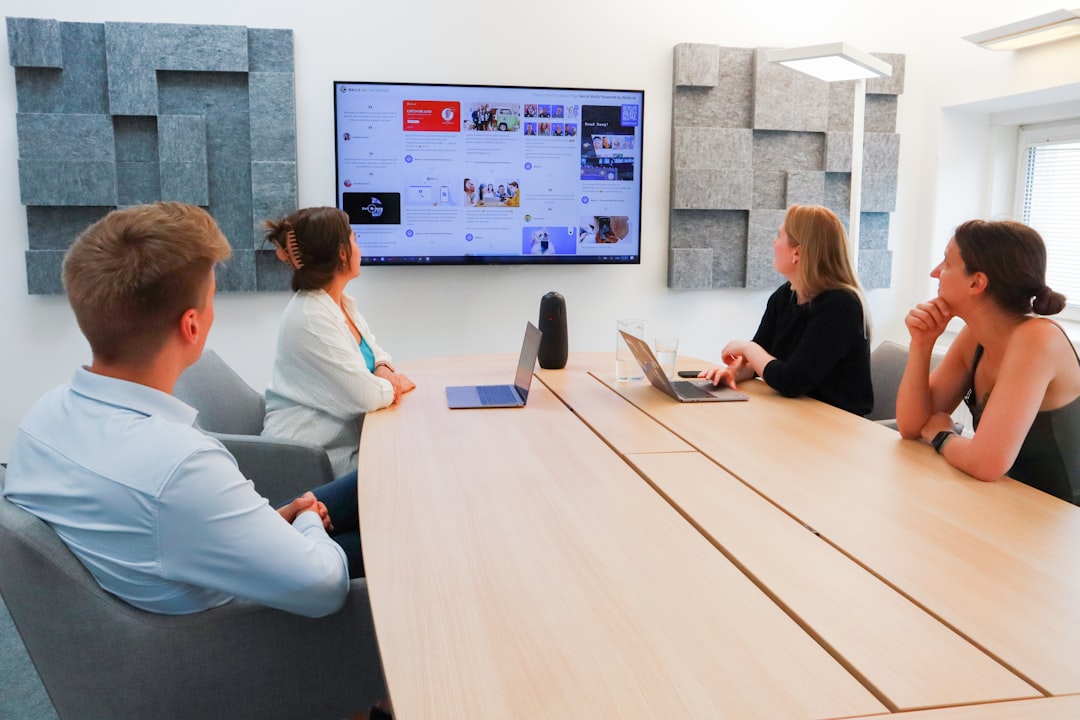
Smart meeting rooms use integrated screens, cameras, microphones, digital whiteboards, and scheduling panels to support both in-person and remote participants. Room-booking systems can show available spaces in real time and reduce scheduling conflicts. More advanced systems use occupancy data to identify whether booked rooms are actually used, helping organizations improve space planning.
3. Workplace analytics platforms
Analytics tools collect and interpret workplace data such as office attendance patterns, space utilization, help desk response times, and collaboration trends. When implemented responsibly, these insights can help leaders identify bottlenecks and improve decisions. For example, if data shows that employees come to the office mainly on Tuesdays and Wednesdays, facilities teams can adjust cleaning, catering, security, and energy use accordingly.
4. IoT sensors and facility automation
Connected sensors can measure occupancy, air quality, lighting levels, temperature, humidity, and energy consumption. These systems can automatically adjust heating, ventilation, lighting, or cleaning schedules. In large buildings, even modest efficiency gains can lead to meaningful savings. They can also improve employee comfort by maintaining healthier indoor environments.
5. Smart access and security systems
Digital badges, mobile credentials, visitor management platforms, and access control systems can improve both security and convenience. Employees and visitors can enter approved areas more efficiently, while security teams gain better oversight of building access. These systems must be deployed with clear governance, especially when they involve personal data or movement logs.
Strategies for Successful Implementation
Buying technology is the easiest part of workplace transformation. The harder task is aligning tools with real business needs and employee expectations. A credible strategy begins with specific problems: Are teams struggling with hybrid meetings? Is office space underused? Are facility costs rising? Are employees frustrated by slow support requests? Clear questions lead to better technology choices.
- Start with a workplace audit: Review how employees use space, tools, and communication channels today.
- Prioritize high-impact use cases: Focus on problems that affect productivity, cost, safety, or employee experience.
- Integrate systems where possible: Avoid isolated tools that create more administrative work.
- Train employees: Even intuitive tools require guidance, especially when workflows change.
- Measure outcomes: Track adoption, satisfaction, response times, utilization rates, and cost savings.
Balancing Connectivity With Privacy
One of the most important concerns in smart workplace adoption is privacy. Sensors, analytics, and access systems can produce valuable operational data, but employees must understand what is being collected and why. Organizations should avoid using smart technologies in ways that feel like hidden surveillance.
A responsible approach includes data minimization, transparency, role-based access, and regular policy reviews. For example, occupancy sensors can often measure whether a room is being used without identifying specific individuals. Aggregated data is usually enough for space planning and energy optimization. When individual-level data is required, the purpose should be clearly justified, documented, and communicated.
Trust is a critical part of workplace technology. If employees believe tools are being used to monitor them unfairly, adoption will suffer. If they see that technology removes friction, improves comfort, and supports flexibility, they are more likely to participate positively.
The Role of AI in Smart Workplaces
Artificial intelligence is increasingly embedded in workplace tools. AI can summarize meetings, recommend documents, schedule tasks, detect anomalies in building systems, and support service desks through intelligent chatbots. These capabilities can reduce repetitive work and help employees focus on higher-value tasks.
However, AI should be introduced with caution. Leaders should verify accuracy, reduce bias, and set boundaries for acceptable use. For example, AI-generated meeting summaries can save time, but important decisions should still be reviewed by responsible participants. Similarly, AI tools used in hiring, performance management, or employee monitoring require especially strict oversight.
Benefits for Employees and Employers
Smart workplace technologies can create measurable benefits when they are connected to practical goals. Employees may experience fewer interruptions, easier collaboration, better access to information, and more comfortable work environments. Employers may gain improved space efficiency, lower operating costs, stronger security, and better organizational visibility.
A practical example is a mid-sized professional services firm with 600 employees operating on a hybrid model. After deploying smart booking, occupancy analytics, and improved video meeting systems, the firm might reduce unused reserved rooms by 40%, cut internal complaints about meeting technology by 25%, and delay the need for additional office space. These results are realistic only when technology is supported by clear processes and active management.

Common Mistakes to Avoid
Organizations often struggle when they treat smart workplace projects as purely technical upgrades. A connected workplace affects behavior, culture, management, and trust. Common mistakes include installing tools without a clear purpose, collecting more data than necessary, failing to integrate platforms, and neglecting employee feedback.
Another frequent problem is over-automation. Not every decision needs to be automated, and not every workplace interaction should be reduced to a metric. Smart technology should support human judgment, not replace it where context, empathy, or strategic thinking is required.
Building a Practical Roadmap
A sensible roadmap begins with a pilot program. Choose one department, floor, or workflow and test the technology under real conditions. Collect feedback from employees, managers, IT teams, and facilities staff. Then refine the approach before expanding it across the organization.
- Define the business objective, such as reducing room conflicts or improving hybrid meetings.
- Select technologies that integrate with existing systems and meet security requirements.
- Communicate clearly about what will change and how data will be used.
- Run a controlled pilot with measurable success criteria.
- Scale gradually based on evidence, not assumptions.
The most effective smart workplaces are not the ones with the most advanced gadgets. They are the ones where technology, policy, culture, and leadership work together. A connected workplace should make work easier to coordinate, spaces easier to use, and decisions easier to support with reliable information.
As organizations continue to adapt to hybrid work, rising operating costs, and changing employee expectations, smart technologies will play a growing role. The challenge is to implement them with discipline and purpose. When deployed thoughtfully, they can help create workplaces that are not only more connected, but also more efficient, secure, flexible, and human-centered.